
What are the differences in the manufacturing methods for fully automatic water chestnut popping boba production line
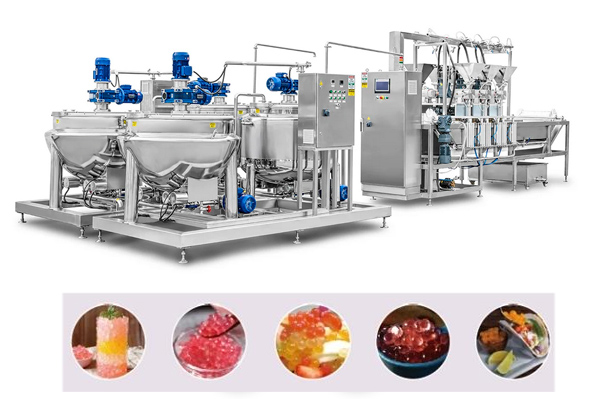
The main differences in the production methods for water chestnut popping balls are as follows:
Traditional Method vs. Spherization Technology Method
Traditional Method:
Process: Mix diced water chestnuts with sugar water and tapioca starch, heat and stir until thickened, then cool, set, and cut into pieces.
Texture: The outer layer is chewy and elastic, while the inside consists of diced water chestnuts, resulting in a relatively firm texture.
Advantages: Simple to operate, no special materials required.
Disadvantages: The bursting effect is not pronounced, and the texture is monotonous.
Spherification Method:
Process: Utilizes the reaction between sodium alginate and calcium lactate to form a thin film that encapsulates water chestnut cubes or water chestnut juice.
Texture: The outer film is thin yet resilient; when bitten into, it bursts with a rich, juicy filling.
Advantages: Rich textural layers and a pronounced bursting effect.
Disadvantages: Relatively complex to execute and requires specialized materials.
Forward Spherification vs. Reverse Spherification
Forward Spherification:
Process: Water chestnut juice containing sodium alginate is dripped drop by drop into a calcium lactate solution to form bursting beads.
Characteristics: The membrane is thin and has a delicate texture, but it is fragile and does not store well.
Applications: Suitable for making small bursting pearls or for immediate consumption.
Reverse Spherification:
Process: Water chestnut cubes coated with calcium lactate are added to a sodium alginate solution to form bursting pearls.
Characteristics: Thick membrane, good shelf life, and more stable bursting pearls.
Applications: Suitable for making large popping bobas or products requiring long-term storage.
Other Differences
Material Selection:
Water Chestnut Processing: Some use water chestnut juice, while others use diced water chestnuts, which affects texture and the bursting effect.
Additives: Sugar, honey, tapioca starch, etc., can be added to adjust sweetness and texture.
Forming Methods:
Machine Production: High efficiency and good product consistency, but equipment costs are higher.
Storage Methods:
Refrigeration: Preserves freshness and texture, but has a short shelf life.
Freezing: Extends shelf life, but may affect texture.
By selecting the appropriate production method based on your needs and equipment capabilities, you can achieve water chestnut popping balls with varying textures and qualities.