
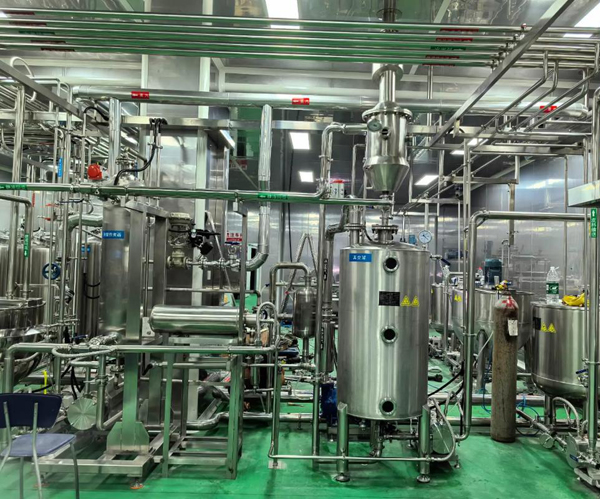
Candy Production Line (Primarily Vacuum Sugar Boiling): Methods for Determining Whether the Vacuum Level Is Normal and Complete
Core Components of a Candy Vacuum System:
Vacuum sugar boiling machines (batch sugar boiling kettles, continuous vacuum thin-film sugar boiling machines); some systems also include vacuum feeding and vacuum gas-filling equipment. The assessment is divided into five key dimensions: instrument readings, dynamic operational stability, pressure retention and leak testing, reverse verification of the production process, and the condition of the vacuum pump itself.
I. First, clarify the standard vacuum ranges for various types of candy (Refer to the equipment manual for specific values)
- Continuous vacuum boiling for hard candies: -0.080 to -0.090 MPa
- Batch-type vacuum boiling kettle for hard candies: -0.075 to -0.088 MPa
- Milk candies/toffee/aerated candies: -0.055 to -0.070 MPa
- Soft candies, pectin candies: Most are cooked at atmospheric pressure; some are concentrated under vacuum at -0.04 to -0.06 MPa
Falling below the lower limit of the process range (insufficient negative pressure, e.g., only reaching -0.06 MPa when making hard candies) indicates insufficient vacuum; a vacuum level approaching -0.095 MPa that remains persistently high can also cause an excessively low boiling point, leading to violent boiling and material loss.
II. Step 1: Visual Inspection of Instruments (Routine Patrol)
- Verify the validity of measuring instruments
- Calibrate vacuum gauges/pressure transmitters regularly to prevent sensor failure or dial sticking;
- Ensure pressure-taking lines are unobstructed, valves are fully open, and there are no blockages; do not rely solely on the pressure at the pump end—use the pressure gauge on the candy kettle as the reference.
- Normal Operating Characteristics
Normal Conditions - After starting the vacuum pump, the vacuum reading drops steadily and reaches the process setpoint within the specified time (typically 3–8 minutes);
- During the stable boiling phase: reading fluctuations ≤ ±0.003 MPa, with no sustained, slow rise;
- When the load is stable (feed and steam are stable), the vacuum does not drop continuously.
Abnormal Indications
- Vacuum fails to reach the process setpoint for an extended period;
- Slow, sustained rise after reaching the setpoint (decreasing negative pressure, typically indicating a leak);
- Violent and frequent needle oscillations: secondary steam surges, liquid accumulation in piping, poor condensation, or violent boiling;
- Vacuum is normal under no-load conditions but drops immediately upon feeding: insufficient condensation capacity or excessive secondary steam exceeding the vacuum pump’s capacity.
III. Step 2: Pressure-Hold Leak Test (To determine system, primary test)
Perform under shutdown/no-load conditions (Do not test with high-temperature sugar syrup to prevent material leakage)
- Evacuate the system to the target vacuum level;
- Close the main vacuum valve to isolate the vacuum pump from the sugar-cooking chamber;
- Observe for 5–10 minutes and record the rate of vacuum recovery:
Pass: Pressure rise ≤ 0.005 MPa/10 min; good seal integrity;
Minor leak: Rise of 0.005–0.01 MPa; vacuum instability during long-term production;
Significant leak: Rise > 0.01 MPa; leak detection required (sight glass O-rings, manholes, shaft seals, flanges, vent valves, sampling valves).
Note: A slight rise in pressure caused by the release of a small amount of water vapor from the liquid ring pump system is normal; a rapid rise in pressure indicates a leak.
IV. Step 3: Auxiliary Assessment Based on the Operating Conditions of the Vacuum Pump and Auxiliary Systems
The confectionery industry primarily uses liquid ring vacuum pumps, with a small number of oil-sealed rotary vane pumps:
Normal Characteristics of Liquid Ring Vacuum Pumps (the mainstream choice for vacuum sugar boiling)
- Motor current is within the rated range; no abnormal noises or vibrations;
- Circulating cooling water: Inlet temperature ≤ 25°C, with sufficient flow; excessively high water temperature directly limits the ultimate vacuum;
- Pump discharge is smooth, with no large bubbles or entrained air;
Abnormalities: Insufficient cooling water, high water temperature, scaling inside the pump housing, or air leakage from the packing or mechanical seal.
Oil-Sealed Rotary Vane Vacuum Pumps
Oil level is normal; oil is clear and bright, with no emulsification or whitish discoloration;
Oil emulsification, low oil level, or vane wear → reduced ultimate vacuum.
Additional Inspection: Condenser (Secondary Steam Cooling)
Condenser scaling or blockage due to material buildup → steam cannot be liquefied, consuming pumping capacity, and preventing vacuum from reaching the desired level
V. Step 4: Cross-Validation Using Syrup and Final Product Quality (Process-Level Assessment)
Deviations in vacuum levels are directly reflected in the candy. This is an ideal method for cross-validation when instrument readings are suspected to be inaccurate:
Typical Symptoms of Insufficient Vacuum (Insufficient Negative Pressure)
- At the same boiling temperature, the syrup has a higher moisture content; hard candies are prone to melting, becoming sticky, and absorbing moisture during storage;
- The boiling point of the syrup is higher than normal, requiring a higher temperature for dehydration; the syrup tends to turn yellow and develop a stronger burnt taste;
- Boiling time increases, reducing production capacity; aerated candies have insufficient air content and a denser texture.
Excessive Vacuum (Exceeding the Process Upper Limit)
- The syrup boils violently and overflows; sugar paste is sucked into the vacuum lines and condenser;
- The boiling point is too low, evaporation is too rapid, and the liquid level is difficult to control.
VI. Simplified Troubleshooting Procedure (Standard On-Site Inspection Steps)
- Check the equipment process card to confirm the target vacuum range for this machine;
- Run the machine under no-load conditions to observe whether the vacuum reaches the no-load limit;
- Conduct a 10-minute pressure hold test to determine if there are any air leaks;
- Resume normal production with material; once stable, continuously record vacuum readings and observe fluctuations;
- Simultaneously check whether cooling water, steam pressure, and feed rate are stable to eliminate operational interference;
- Compare the moisture content, color, and boiling time of the finished product to cross-verify whether the vacuum has actually met the target.
VII. Common Misconceptions
- Focusing only on the vacuum at the vacuum pump outlet without checking the pressure inside the sugar-cooking kettle: Due to resistance and leaks in the piping, readings at these two points may differ; use the kettle reading as the reference;
- Failing to calibrate the vacuum gauge and relying solely on a single instrument’s reading;
- Ignoring operational disturbances: Sudden spikes in steam pressure or fluctuating feed rates can cause temporary vacuum fluctuations, which do not necessarily indicate equipment failure;
- Conducting pressure retention tests during high-temperature operations with sugar present: As the sugar syrup boils and vaporizes, pressure naturally rises, leading to false positive leak detections.