
How to Develop a Maintenance Plan for Candy Production Line Equipment,Developing a maintenance plan is key to ensuring stable equipment operation, extending service life, and reducing repair costs. The following are the detailed steps:
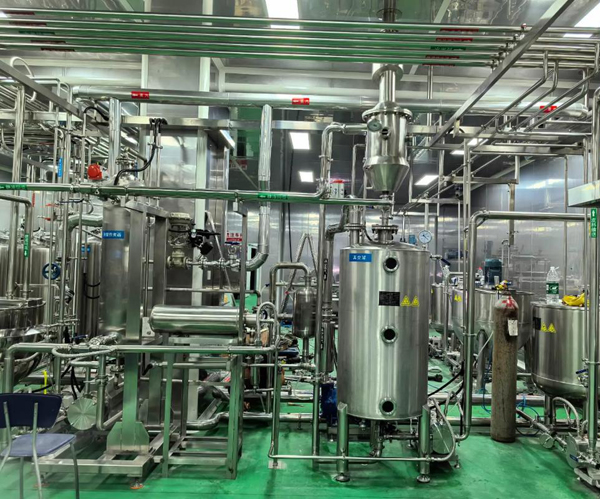
Define Maintenance Objectives and Analyze Equipment
Set Maintenance Objectives
Quantitative Objectives: Reduce failure rates (e.g., by 30%), extend equipment lifespan (e.g., increase MTBF by 20%), and control repair costs (e.g., within 5% of the equipment’s total value).
Equipment Classification: Categorize equipment into critical, important, and general categories based on importance, and develop different maintenance strategies accordingly.
Equipment Information Collection and Analysis
Establish an Equipment Registry: Record information such as equipment model, serial number, years of service, and historical failures.
Failure Mode Analysis: Use methods such as Fault Tree Analysis (FTA) to identify high-frequency failure points and their causes. II. Formulating Maintenance Strategies and Schedules
Selecting Maintenance Strategies
Preventive Maintenance: Regular maintenance, such as cleaning, lubrication, and replacement of wear-prone parts, suitable for most equipment.
Predictive Maintenance: Utilizing monitoring data to predict equipment condition and take proactive measures, suitable for critical equipment.
Corrective Maintenance: Repairs performed after equipment failure to minimize downtime.
Determining Maintenance Intervals
Time-Based Method: Maintenance performed based on operating hours, e.g., every 500 hours.
Performance-Based Method: Maintenance performed based on equipment performance parameters, e.g., when accuracy drops below a certain threshold.
Dynamic Adjustment: Flexibly adjusting maintenance intervals based on production schedules, seasonal variations, and the actual condition of the equipment.
Refining Maintenance Tasks and Resource Allocation
Developing a Maintenance Task List
Routine Maintenance: Cleaning equipment, inspecting fasteners, lubricating moving parts, etc.
Periodic Maintenance: Deep cleaning, functional testing, replacing worn parts, calibrating accuracy, etc.
Resource Allocation
Personnel Training: Train operators and maintenance staff to master equipment operation, routine maintenance, and troubleshooting skills.
Spare Parts Management: Establish a reasonable spare parts inventory to ensure sufficient stock of commonly used parts and reduce downtime caused by waiting for parts.
Tools and Equipment: Provide necessary maintenance tools and testing equipment, such as lubrication tools and measuring instruments.
Implementation, Monitoring, and Continuous Improvement
Data Recording and Analysis
Record Maintenance Data: Keep detailed records of each maintenance session, including time, scope, personnel, and costs.
Metrics Monitoring: Track key performance indicators such as equipment failure rate, Mean Time to Repair (MTTR), and Overall Equipment Effectiveness (OEE).
Continuous Improvement
PDCA Cycle: Continuously optimize the maintenance plan by following the Plan-Do-Check-Act (PDCA) cycle.
Case Analysis: Analyze typical failure cases, summarize lessons learned, and improve maintenance measures.
Establishing Emergency Response Plans
Developing Emergency Measures: Develop emergency response plans for potential failures of critical equipment, clearly defining handling procedures and responsible personnel.
Backup Equipment and Alternatives: Prepare backup equipment or temporary alternatives to ensure that production is not significantly impacted in the event of equipment failure.
VI. Conclusion
By following the above steps to develop a scientific and reasonable equipment maintenance plan, it is possible to effectively improve equipment reliability and service life, reduce repair costs, and ensure the smooth operation of production. At the same time, continuously improving and optimizing maintenance strategies to adapt to changes in the equipment operating environment and production demands will enhance the company’s competitiveness.