
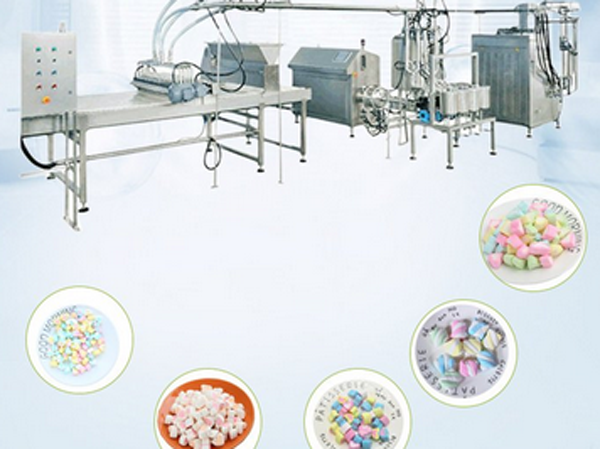
Configuration of marshmallow making equipment
The configuration of marshmallow candy processing equipment varies depending on the equipment type and application. Below are some common configuration elements:
Heating System
Heating Method
Electric Heating: Uses electric heating elements for rapid heating and precise temperature control, suitable for indoor use.
Gas Heating: Utilizes liquefied petroleum gas (LPG) or natural gas for heating, suitable for outdoor or power-unavailable locations.
Heating Power: Typically ranges from 500W to 3000W based on model and production capacity requirements.
Sugar System
Sugar Hopper: Stores sugar syrup, with capacity determined by production output.
Sugar Conveying: Automatically or manually feeds syrup into the heating chamber to ensure continuous operation.
Rotating Mechanism
Rotation Motor: Drives the spinning spindle to form marshmallow candy.
Rotation Speed Control: Adjustable speed regulates the fluffiness and shape of the marshmallow candy.
Dispensing Outlet
Dispensing Head Design: Influences the shape and texture of the marshmallow candy, available in single-head, multi-head, and other types.
Temperature Control: Ensures even melting of the sugar mixture at the outlet to prevent clogging.
Control System
Control Panel: Displays equipment status and sets parameters such as temperature and rotation speed.
Automation Level: Fully automatic models enable one-button operation; semi-automatic models require manual adjustments.
Safety Protection
Overheat Protection: Prevents equipment damage from excessive heat.
Leakage Protection: Ensures operator safety.
Materials & Construction
Body Material: Commonly stainless steel or aluminum alloy for corrosion resistance and easy cleaning.
Structural Stability: Ensures stable operation with minimal vibration.
Additional Features
Shape Creation: Produces various shapes and flavors of marshmallow candy.
Mobility: Equipped with casters for easy movement and transportation.
Application Scenarios
Home Use: Compact size and simple operation, ideal for family gatherings.
Commercial Use: High output and stable performance, suitable for shops, amusement parks, and similar venues.
Summary: When selecting marshmallow candy equipment, comprehensively evaluate factors including heating method, sugar dispensing system, rotating mechanism, control system, safety features, material construction, and additional functions based on actual needs and usage scenarios. This ensures the equipment meets production demands and enhances operational efficiency.
Fancy creation features of the marshmallow making equipment
The fancy-making features of a marshmallow candy machine refer to the device’s ability to produce marshmallow candy in various shapes, colors, and flavors, enhancing product diversity and appeal. Here’s a detailed explanation:
Color and Flavor Diversity
Colored Sugar Usage:
Multiple Color Options: Equipped with assorted food-grade colored sugars like red, blue, yellow, etc., users can freely select based on preference.
Color Mixing: Some machines support adding multiple colors simultaneously to create vibrant, multi-colored marshmallow candy with enhanced visual appeal.
Flavor Customization:
Flavor Additives: Incorporate flavorings like fruit or chocolate into the sugar mixture to produce distinct tastes.
Natural Ingredients: Utilize natural elements such as fruit juices or jams to create healthy, delicious marshmallow candy.
Shape and Pattern Creation
Mold Applications:
Specialized molds: Equipped with various shaped molds like animals, flowers, stars, etc., enabling specific marshmallow candy forms.
Custom molds: Some high-end models support custom molds to meet personalized needs.
Technical control:
Rotation speed adjustment: Control marshmallow candy fluffiness and shape by adjusting the rotation mechanism’s speed.
Dispensing Nozzle Design: Different nozzle shapes and quantities produce distinct textures and structures in the marshmallow candy.
Decorative Threading Techniques
Bamboo Skewer Technique:
Rotational Method: Operators evenly wrap sugar threads around the skewer through steady rotation, forming large marshmallow candy clusters.
Layered Accumulation: Using multi-colored sugar threads, layers are stacked sequentially to create visually distinct, tiered marshmallow candy.
Artistic Shaping:
Hand-Shaping: Experienced operators manually sculpt intricate artistic forms.
Combination Pairing: Combining differently shaped and colored marshmallow candies creates unique visual effects.
Automation Levels
Fully Automatic Models:
One-Button Operation: Features automatic temperature control and sugar dispensing. Press a button to automatically produce decorative marshmallow candy.
Smart Control: Built-in smart chip with preset decorative programs for simplified operation.
Semi-Automatic Models:
Manual Adjustment: Requires operators to manually control temperature, rotation speed, and other parameters, suitable for experienced users.
High Flexibility: Allows free customization based on personal creativity for more diverse production effects.
Additional Features
Lighting Effects:
ED Color Lights: Some models feature LED color lights to enhance visual appeal during production.
Music Playback:
Background Music: Certain commercial models support music playback to create a cheerful atmosphere and attract customers.
Summary: The decorative production features of marshmallow candy machines achieve product diversity and personalization through combinations of color, flavor, shape, and technique. Whether for home or commercial use, these decorative functions enhance the visual appeal and fun of marshmallow candy, meeting the needs of different users.
What aretechniques for making decorative marshmallow candy
Creating decorative marshmallow candy requires mastering certain techniques to produce vibrantly colored, uniquely shaped, and delicious treats. Here are the key techniques:
Preparing Ingredients
Sugar Selection: Use granulated sugar or specialized marshmallow candy sugar to ensure fine, delicate strands.
Colored sugar can add vibrancy—pay attention to pigment quality and choose food-grade coloring.
Auxiliary Ingredients: Gelatin powder or sheets enhance elasticity and stability.
Corn syrup prevents crystallization, maintaining softness.
Syrup Preparation
Proportion Control: Maintain precise ratios of sugar, water, and corn syrup—typically 2:1:0.5.
Temperature Management:
Use a candy thermometer to heat syrup to approximately 234°F (118°C), ensuring complete dissolution and optimal consistency.
Whipping Techniques
Gelatin Treatment:
Pre-soak gelatin powder in cold water until softened, then mix thoroughly with hot syrup to dissolve completely.
Whipping Timing: Whip the syrup only after it cools to an appropriate temperature (around 60°C) to prevent gelatin from setting prematurely.
Whipping Intensity: Use an electric mixer on high speed until the syrup expands significantly, turns white, and forms a foamy texture.
Shaping Techniques
Mold Usage:
Use various shaped molds to create specific marshmallow forms.
Lightly dust molds with cooked cornstarch to prevent sticking.
Hand Shaping:
Shape marshmallows by hand or with tools while they are still warm but not fully set. Wear disposable gloves to prevent sticking.
Decorating:
Add chocolate sauce, jam, colored sugar pearls, or other decorations for visual appeal.
Color and Flavor
Color Addition:
Add food coloring when the syrup cools to approximately 60°C (140°F), stirring thoroughly.
Add in small increments to control color intensity.
Flavor Customization: Incorporate food extracts or fruit juices during whipping to create distinct flavors.
Techniques
Bamboo Skewer Usage:
For spun marshmallow candy, use clean, smooth bamboo skewers. Maintain a steady rotation speed to ensure even thread formation.
Temperature Control:
Maintain moderate machine temperature—excessive heat scorches strands, while insufficient heat hinders formation.
Monitor temperature fluctuations during operation and adjust promptly.
Storage Methods
Moisture & Sticking Prevention:
Immediately dust surface with cornstarch or powdered sugar after completion to prevent sticking. Store in airtight containers to avoid moisture absorption.
Refrigerated Storage: For extended storage, refrigerate but consume promptly to maintain texture.
Summary: Crafting decorative marshmallow candy demands precision and patience, mastering key steps like syrup preparation, whipping, and shaping. Through consistent practice, you’ll create vibrant, uniquely shaped, and delicious marshmallow candy.