
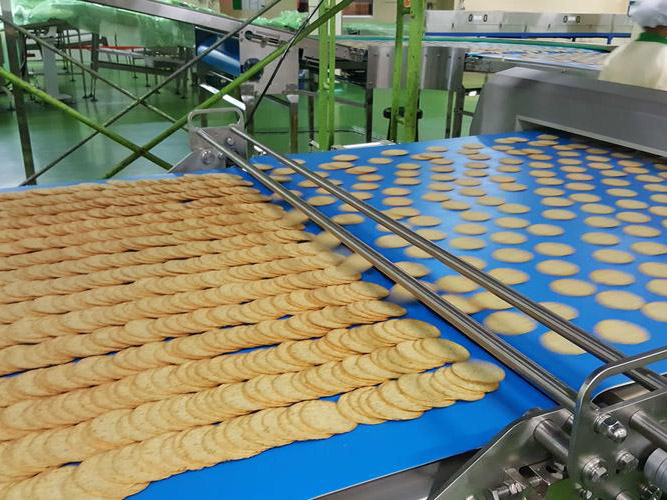
Main equipment Of Biscuit Making Machine
biscuit making machine is equipment used for the automated production of biscuits, covering the entire process from raw material making to finished product packaging. The main types include:
Forming Equipment
Roll-Press Forming Machine: This machine presses dough between rollers and imprints patterns, producing biscuits with various designs. It is suitable for large-scale production and offers high efficiency.
Extrusion Forming Machine: Extrudes dough into shape, suitable for producing long, irregularly shaped biscuits such as finger biscuits and cream puffs.
Cutting Forming Machine: First rolls out the dough, then cuts it into shape using molds, suitable for producing biscuits with regular shapes.
Baking Equipment
Tunnel Ovens: biscuits are baked in a high-temperature tunnel on a conveyor belt, offering high production efficiency and suitable for large-scale production lines.
Rotary Ovens: The oven rotates to ensure even heating, suitable for various types of biscuits with moderate output.
Box Ovens: Multi-tiered trays, suitable for small-scale production or special biscuits, with flexible operation.
Cooling and Conveying Equipment
Cooling Conveyor: After baking, biscuits naturally cool during conveying, preserving texture and shape.
Turn Conveyor: Changes conveying direction, saving space and adapting to different factory layouts. Filling and Coating Equipment
Filling Machine: Injects jam, cream, etc., between biscuits to enhance taste and flavor.
Coating Machine: Applies coatings such as chocolate or syrup to the surface of biscuits, enhancing appearance and flavor.
Packaging Equipment
Automatic Packaging Machine: Completes biscuit measurement, bagging, and sealing, improving packaging efficiency and ensuring hygiene.
When selecting biscuit making machinery, factors such as product type, production scale, budget, and automation level should be comprehensively considered to ensure stable equipment performance and meet production requirements.
Prices of biscuit processing machine
biscuit processing machine prices vary significantly depending on factors such as equipment type, production capacity, automation level, and brand. Below are the price ranges for some common types of equipment:
biscuit Forming Machine
Small-scale biscuit forming machine: Prices range from approximately 2,000 to 10,000 yuan, suitable for startups or small-scale production, with relatively simple functionality.
Medium-sized biscuit forming machine: Prices range from approximately 20,000 to 50,000 yuan, with moderate production capacity, suitable for various biscuit production needs.
Fully automatic biscuit forming machine: Prices range from approximately 60,000 to 200,000 yuan, with high production efficiency and user-friendly operation, suitable for medium-sized and larger enterprises.
biscuit production line
Small-scale biscuit production line: Priced between approximately 50,000 and 100,000 yuan, it includes basic equipment such as forming, baking, and cooling, suitable for small and medium-sized enterprises with an annual production capacity of several dozen tons.
Medium-sized biscuit production line: Priced between approximately 200,000 and 500,000 yuan, it has higher production capacity and more complete equipment configuration, suitable for production needs of a certain scale.
Large-scale fully automatic biscuit production line: Prices typically exceed 800,000 yuan and can reach several million yuan, featuring high levels of automation and intelligence, suitable for large-scale industrial production.
Other Related Equipment
Baking Equipment:
Tunnel Oven: Prices range from approximately 100,000 yuan to 300,000 yuan, varying by length and configuration.
Rotary oven: Prices range from approximately 50,000 to 150,000 yuan.
Packaging equipment: Automatic packaging machine: Prices range from approximately 30,000 to 100,000 yuan, varying depending on packaging methods and functions.
Notes:
Customization requirements: Prices may increase for special customization requests.
Brand influence: Well-known brand equipment is typically more expensive but offers better quality and after-sales service.
Market conditions: Equipment prices may fluctuate based on market supply and demand, raw material prices, and other factors.
We recommend selecting equipment based on actual production needs, budget, and long-term planning. Additionally, consult multiple suppliers to understand different brands and models, and conduct comprehensive comparisons to achieve the best cost-effectiveness.
Maintenance Costs for biscuit Processing Machinery
Maintenance costs for biscuit processing machinery vary depending on factors such as equipment type, scale, usage frequency, and maintenance methods. The following is a detailed analysis of maintenance costs:
Daily Maintenance Costs
Cleaning Costs: Regularly clean the equipment to remove residual materials and dust. Generally, standard cleaning tools and detergents are used, resulting in relatively low costs.
Lubrication Costs: Regularly apply lubricating oil to bearings, transmission components, etc. Lubricating oil costs are not high, but require ongoing investment.
Part Replacement Costs
Wear-and-Tear Part Replacement: Parts such as belts, chains, blades, and seals require regular replacement. These parts are relatively inexpensive but have a high replacement frequency.
Main Component Repair or Replacement: Repair or replacement of major components such as motors, transmission systems, and control systems is costly, but these components typically have a longer service life and lower failure rates.
Professional Maintenance Costs
Regular Inspections and Maintenance: Hiring professional technicians for regular inspections and maintenance, with costs varying based on equipment complexity and inspection frequency.
Failure Repairs: When equipment malfunctions, professional personnel must perform timely repairs. Emergency repair costs may be high, but preventive maintenance can reduce failure rates.
Other costs
Training costs: Operators need to undergo training on equipment use and maintenance to ensure proper operation and timely identification of issues.
Spare parts inventory: Stocking common spare parts reduces equipment downtime. Spare parts inventory requires a certain level of financial investment.
Maintenance Cost Levels
Small Equipment: Maintenance costs are relatively low, with minimal expenses for routine maintenance and part replacements, making it suitable for small businesses with limited budgets.
Medium-Sized Equipment: Maintenance costs are moderate, requiring a more systematic maintenance plan and some spare parts inventory, but costs can be balanced by improving production efficiency.
Large Production Lines: Maintenance costs are high, involving complex systems and more specialized maintenance, but with high automation levels, long-term maintenance costs per unit can be reduced.
Methods to Reduce Maintenance Costs
Regular maintenance: Develop and strictly enforce a maintenance plan. Preventive maintenance can significantly reduce the incidence of failures and lower repair costs.
Operator training: Enhance training for operators to improve their equipment operation and maintenance skills, reducing damage caused by improper operation.
Use high-quality parts: Select original manufacturer or reliable-quality parts to avoid frequent replacements and failures caused by using low-quality parts.
Equipment upgrades and renovations: Timely upgrades and renovations of equipment can enhance reliability and efficiency, reducing long-term maintenance costs.
Summary
Maintenance costs for biscuit processing machinery account for a certain proportion of the total equipment lifecycle costs, but through reasonable maintenance plans and measures, these costs can be effectively controlled. Regular maintenance, standardized operations, and the selection of high-quality parts are key to reducing maintenance costs. In the long run, appropriate maintenance investments can extend equipment lifespan, improve production efficiency, ensure product quality, and bring greater economic benefits to the enterprise.