
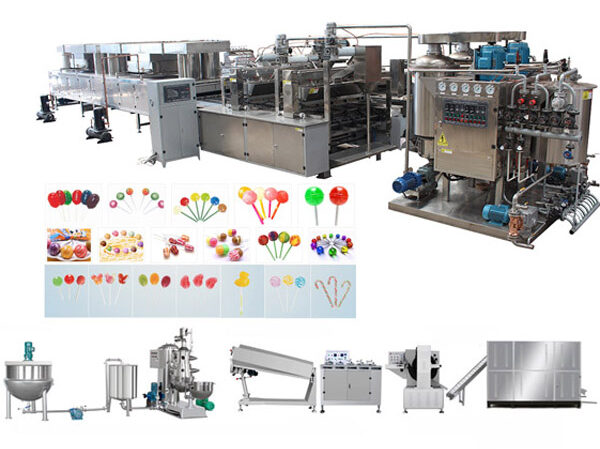
Which candy machine manufacturer are better
I understand you’re researching large-scale candy machine manufacturers. Selecting the right equipment is crucial for production efficiency, product quality, and business growth. Below, I’ve compiled information on several well-known domestic and international manufacturers along with selection recommendations.
First, here’s a table for a quick overview of major large-scale candy machine manufacturers and their key features:
Zhiyan Machinery Equipment: Hard candy/toffee pouring production lines, AWS automatic sugar weighing and mixing systems, CQ300 continuous marshmallow aerators, GDL series lollipop pouring production lines
Shanghai ZY Candy Equipment: Vacuum film hard candy molding production line, gelatinous candy production line, biscuit production line;
Fifth-generation GD-SQ series fully automatic PLC-controlled gelatinous candy molding production line with over 60% export rate; products sold to multiple countries.
Xiamen Candy Machinery: CNC chocolate and candy molding equipment (filled, decorated);
Fully automatic non-baking soft candy boiling, molding, filling, and decorating production line with emphasis on R&D; technologically forward-thinking. No-bake gummy candy fully automatic boiling, molding, filling, and decorating production line; emphasizes R&D; technology is forward-looking
Shanghai Food Machinery: YX600 servo-driven candy molding processing equipment; capable of producing nutritional health and multi-flavor candies (e.g., donkey-hide gelatin gummy candies, pear syrup candies); high production line conversion flexibility; equipment exported to over 120 countries and regions worldwide
Shanghai Machinery Equipment: HQ Series Fully Automatic Candy Production Line; Capable of producing various candy types (hard candy, soft candy, filled candy, and assorted specialty candies)
Shanghai Candy Machinery Co., Ltd.: Diverse candy machinery and chocolate processing equipment. Products exported to multiple countries; large-scale enterprise
Understanding Different Candy Equipment
With numerous candy equipment types available, understanding them helps you make better choices:
Cooking Equipment: Such as vacuum film sugar cookers, used for syrup concentration and flavoring.
Forming Equipment: This is the core.
Molding Production Lines: Shapes candies through molds, suitable for hard candies, soft candies (gelatin candies), toffees, etc. Modern molding lines are often PLC-controlled, offering high precision and the ability to add colorants, flavorings, acid solutions, and even execute complex processes like filling, layering, and spray decorating.
Punching machines: Used for specific shapes of hard candies or milk candies.
CNC molding equipment: Suitable for complex chocolate and certain soft candy shapes (e.g., filling, piping).
Packaging equipment: Includes pillow packers, twist wrappers, and other machines for final candy packaging.
Key Considerations When Selecting Equipment
Beyond brand reputation, these factors are crucial when choosing a candy production line:
- Define Requirements: What candy types will you produce (hard candy, gummy candies, chocolate, tablet candies, etc.)?
What is the projected output (hourly or daily production)?
What automation level is required?
What are the workshop layout and energy conditions (e.g., voltage, steam)?
What is the budget range? The answers lie within your requirements.
- Key Technical Considerations:
Control System: PLC (Programmable Logic Controller) serves as the core of modern automated equipment. It offers greater stability, reliability, and intelligence compared to traditional relay control systems, with lower failure rates.
Key Components: Verify whether major components such as pumps, motors, and refrigeration units are from reputable brands, as this directly impacts long-term performance stability.
Process Adaptability: Can the equipment flexibly adjust parameters to accommodate future new product development? For example, a good production line may allow switching between hard and soft candies or easily adding features like filling, coating, etc. - Evaluate Manufacturer Qualifications and Services:
Certifications: Especially crucial if products are intended for export, certifications like EU CE Marking and ISO 9001 Quality Management System Certification are important reference indicators.
After-Sales Service: Critical. Verify if the manufacturer provides installation/commissioning, operator training, technical guidance (including process flow, recipes, and workshop layout planning), maintenance response times, and spare parts supply.
On-Site Inspection: If possible, visit the manufacturer’s production facility to assess their processing capabilities, assembly standards, and even observe equipment in operation.
Existing Customer Cases: Inquire about the manufacturer’s client portfolio. Securing feedback from current users regarding their operational experience is highly beneficial.
Cutting-Edge Technology Trends
Candy equipment continues to evolve, with key trends including: High Automation and Intelligence: Integration of PLCs and Human-Machine Interfaces (HMIs) enables parameter setting, process visualization, and fault diagnosis, reducing manual intervention and enhancing quality consistency.
Flexible Production: Equipment designs prioritize adaptability, such as rapid mold changes and parameter/component adjustments to accommodate diverse candy types and production processes.
Hygienic Design Focus: Compliance with food GMP standards through stainless steel construction and easy-to-clean structural designs ensures food safety. Energy Efficiency & Environmental Protection: Optimized thermal energy recovery systems reduce overall energy consumption.
Follow-up Recommendations
Selecting large-scale candy manufacturing equipment is a significant decision. Consider the following:
What types of candy do you primarily intend to produce? (e.g., focus on gummy candies, or require versatility for hard candies, chocolates, and multiple categories?)
What level of automation do you expect for the production line? (e.g., highly automated, or with manual operation for certain stages?)
What are your approximate production capacity goals? (e.g., desired hourly or daily output?)
What is your approximate budget range?
If you’d like more information on specific manufacturers for particular candy types (e.g., dedicated chocolate equipment or gummy candy machinery) or have detailed questions about equipment features, I’d be happy to provide further insights based on available resources.
How to Choose Candy Machine Manufacturer
Choosing the right candy machine manufacturer is a critical decision that directly impacts your product quality, production efficiency, and long-term operational costs. Below is a systematic and practical guide to help you make an informed choice step by step.
Step 1: Conduct a Thorough Self-Assessment
Define Your Requirements
Before selecting a manufacturer, you must first have a clear understanding of your own needs. Create a requirements list to organize your thoughts:
Primary Candy Types
Hard candy, soft candy (gummies), milk candy, toffee, tablet candy, chocolate?
Requirements for Special Processes
Filling, layering, injection molding, marbling, etc.?
Example: Focusing on functional gummy candies (e.g., gummy bears) requiring jam filling.
Target Production Capacity
What is the desired hourly or daily output in kilograms? This determines the production line’s scale and specifications.
Example: Target output is 500 kg/hour.
Automation Level
Do you prefer fully automated, semi-automated, or manual operation? How much manual intervention are you willing to accept?
Example: Seeking high automation requiring only 1-2 operators for the entire line.
Budget Range
What is the total budget for equipment procurement? Allowance must be made for equipment cost, freight, installation/commissioning, training, and potential spare parts expenses.
Example: Budget range of $200,000–$300,000 USD.
Factory Conditions
Does the workshop area, ceiling height, power supply voltage (e.g., 380V), compressed air source, steam pressure/temperature, and cold water infrastructure meet requirements?
Example: Workshop dimensions 20m x 8m, with 380V power and 0.6MPa steam.
Future Plans
Are there plans within the next 1-3 years to expand product lines (e.g., adding hard candies), increase production capacity, or upgrade technology?
Example: Plans to add a small-batch chocolate coating line within the next two years.
Only by clearly defining your requirements can you engage in efficient, professional communication with manufacturers and determine if their solutions truly align with your needs.
Step 2: Screening Potential Manufacturers—Evaluating Key Metrics
Based on your requirements, begin identifying and screening potential suppliers. Focus on the following aspects:
- Specialization and Experience Alignment:
Seek manufacturers specializing in equipment for your specific candy type. For example, a company excelling in gummy production lines may not be top-tier for hard candy equipment.
Examine their years of industry experience and client references. Request successful case studies of similar product manufacturing. - Technical Capabilities and Equipment Performance:
Core Technology: Does the equipment utilize PLC (Programmable Logic Controller) + touchscreen (HMI)? PLC control systems offer greater stability, intelligence, lower failure rates, and easier parameter adjustments compared to traditional relay controls.
Key Components: Verify if core parts (e.g., pumps, motors, sensors, pneumatic components, refrigeration units) use internationally or domestically renowned brands (e.g., Siemens, Mitsubishi, SMC). This directly impacts long-term reliability and precision.
Process Adaptability: Can parameters (temperature, pressure, flow rate, etc.) be flexibly adjusted? Is mold switching convenient during product changeovers? Is future functionality upgrades (e.g., adding filling mechanisms) easily achievable? - Manufacturing Quality and Materials:
Materials: All food-contact surfaces must use premium 304 or 316 stainless steel. Surface finishes (e.g., polishing, brushing) must meet food hygiene standards and facilitate easy cleaning.
Manufacturing Processes: If feasible, conduct an on-site factory inspection. Assess production environment, assembly standards, worker proficiency, and the presence of comprehensive quality control procedures. - Certification and Compliance:
Verify the manufacturer holds ISO 9001 Quality Management System certification.
Confirm equipment meets mechanical safety and food hygiene standards like CE (mandatory for European exports) and GB (Chinese national standards). These certifications form the foundation of equipment quality and safety assurance. - After-Sales Service and Support:
This is paramount! Even the best equipment requires maintenance.
Service Scope: Does the supplier offer complimentary installation, commissioning, operational training, and maintenance training? Do they provide foundational guidance on production processes and recipes? (A top-tier equipment supplier also acts as your process consultant.)
Response Time: What is the after-sales team’s response mechanism? Can they provide *24/7 online support? How are urgent malfunctions handled?
Spare Parts Supply: Are commonly used spare parts stocked? What are the pricing and lead times for procuring spare parts?
Step 3: In-Depth Communication & Evaluation — Ask the Right Questions Engage in thorough discussions with the shortlisted manufacturers. Don’t rely solely on sales pitches; speak directly with technical engineers and pose these critical questions:
Regarding my [Your Product]
Step 3: In-Depth Communication and Evaluation—Ask the Right Questions
Engage in thorough discussions with the shortlisted key manufacturers. Don’t just listen to sales pitches; ensure you speak directly with technical engineers and pose the following critical questions:
For my [your product type], how does your equipment guarantee [a key metric, such as texture, flavor retention, or structural stability]?
What are the maximum and minimum production capacities of the equipment?
What are the approximate energy consumption figures (electricity, gas, steam)?
What is the total footprint of the entire production line?
What infrastructure support (water, electricity, gas) is required? What is the lead time from order placement to delivery and installation?
Can you provide a detailed draft of the after-sales service agreement?
Can you arrange for us to visit your factory or an existing customer’s facility to observe equipment operation in person? (Very important!)
Step 4: Comprehensive Decision-Making — Weighing Pros and Cons
After receiving proposals and quotes from each supplier, conduct a comprehensive comparison:
Don’t focus solely on price: The lowest bid may compromise on materials, configuration, or after-sales service. Calculate the total cost of ownership across the entire lifecycle.
Compare technical solutions: Which supplier’s technology best aligns with your process requirements? Which equipment offers greater foresight and flexibility?
Evaluate “vibes”: During interactions, which supplier demonstrated greater professionalism, integrity, and willingness to prioritize your needs? Was communication smooth? These factors often indicate the potential for a successful future partnership.
Summary Checklist:
- Clearly defined your product specifications, production capacity, and budget requirements.
- Identified several specialized manufacturers.
- Verified their certifications (ISO9001, CE, etc.) and client references.
- Confirmed equipment uses PLC control and components from reputable brands.
Confirmed equipment materials are food-grade stainless steel.
Arranged or completed on-site visits to manufacturers’ facilities.
Thoroughly reviewed after-sales service terms (installation, training, response time, spare parts).
Compared multiple proposals—decision not solely based on price.
By following these steps, you can systematically narrow your options and ultimately find a reliable, professional candy machine manufacturer who can become your long-term partner.
Factors for Selecting a Candy Machine Manufacturer
When choosing a candy machine manufacturer, several key factors must be considered to ensure the selected equipment meets your production requirements and delivers reliable performance and support. Here are some recommendations:
Define Requirements
Production Scale: Determine your anticipated output and select equipment with matching capacity. Large manufacturers typically offer high-end equipment suited for mass production, while small or startup businesses may require more flexible, cost-effective solutions.
Product Type: Different candies (e.g., hard candies, gummies, chocolates) require distinct production processes and equipment. Ensure the manufacturer offers specialized machinery suited to your product category.
Automation Level: Select equipment with appropriate automation based on your budget and efficiency requirements. Highly automated systems enhance productivity and consistency but involve higher initial investment.
Evaluating Manufacturer Capabilities
Technical Expertise: Assess the manufacturer’s R&D capabilities and technical background. Leading manufacturers typically possess advanced technologies and patents, enabling them to deliver innovative and efficient solutions.
Production Experience: Select manufacturers with extensive experience in candy machinery production. They possess deeper understanding of industry standards and challenges, offering more specialized equipment and services.
Success Cases: Review the manufacturer’s client list and success cases to evaluate equipment performance in actual production and gather customer feedback.
Equipment Quality and Performance
Materials and Craftsmanship: Ensure equipment is constructed from premium materials with superior workmanship to guarantee long-term stable operation and product quality.
Precision and Efficiency: The processing accuracy and production efficiency of equipment directly impact product yield rates and manufacturing costs.
Safety and Compliance: Equipment must meet relevant safety standards and regulatory requirements to ensure operational safety and product compliance.
After-Sales Service and Support Installation and Commissioning: Verify whether the manufacturer provides installation and commissioning services to ensure seamless production startup.
Training Services: Determine if the manufacturer offers operational and maintenance training to help your staff master equipment usage and upkeep techniques.
Maintenance and Repair: Inquire about warranty periods and after-sales service policies to ensure timely repairs and support when equipment malfunctions.
Cost Considerations
Equipment Price: Compare quotes from different manufacturers to select cost-effective equipment.
Operating Costs: Evaluate long-term operational expenses by considering energy consumption, maintenance costs, and production efficiency.
Return on Investment: Evaluate the expected payback period to ensure the investment delivers reasonable returns.