
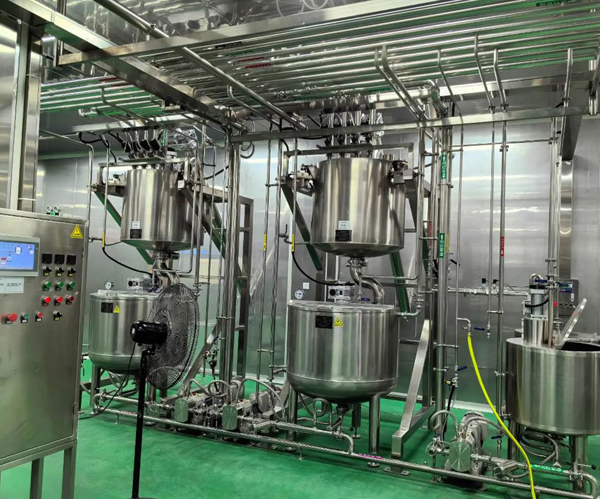
Categories of candy production line
Candy machinery can be classified into various categories based on different criteria:
By Function
Candy Forming Machines
Tablet Presses: Used to compress sugar into tablets, such as chewing gum and mints.
Extruders: Extrude sugar strands through molds, suitable for lollipops and gummies.
Molding Machines: Pour syrup into molds to form shapes, used for chocolate and hard candies.
Cutting Machines: Cut sugar into specific shapes and sizes, such as square candies or stick candies.
Candy Packaging Machines
Pillow Packaging Machines: Package candies into pillow-shaped bags, commonly used for candies and chocolates.
Twist Wrapping Machines: Used for twist-wrapping candies, such as traditional candy packaging methods.
Fully Automatic Packaging Lines: Integrate multiple processes to achieve automated candy packaging, sealing, printing, etc.
By Production Process
Hard Candy Production Equipment: Includes boiling pans, cooling tables, molding machines, and packaging machines for hard candy production.
Soft Candy Production Equipment: Covers syrup preparation equipment, molding machines, drying equipment, and cutting machines for soft candy manufacturing.
Chocolate Production Equipment: Involves refining machines, tempering machines, molding machines, and packaging machines for chocolate processing and packaging.
By Automation Level
Semi-automatic candy machines: Require manual intervention for certain operations, suitable for small-scale production or custom orders.
Fully automatic candy machines: Achieve fully automated production, enhancing efficiency and product consistency, ideal for large-scale manufacturing.
By Product Type
Marshmallow Machines: Produce marshmallows, available in compact household models and commercial-grade units.
Lollipop Machines: Specialize in lollipop production, encompassing syrup injection, cooling, and molding processes.
Candy Mixers: Ensure uniform blending of ingredients to guarantee consistent texture and quality.
By Production Scale
Small-scale candy machines: Suitable for home workshops or small candy shops, featuring low output and simple operation.
Medium-scale candy machines: Designed for mid-sized candy manufacturers, offering moderate automation and production efficiency.
Large-scale candy machines: Used for industrial mass production, characterized by high automation, high output, and comprehensive functionality.
Through these classifications, candy machines can be selected based on production requirements, product types, and scale to enhance production efficiency and product quality.
Forming Methods of Candy Machine
Candy machines employ diverse forming methods, primarily selected based on candy type and characteristics. Common forming techniques include:
Press Forming
Principle: Processes cooled sugar strands into candy pieces via pressing equipment.
Process:
- Sugar strands enter the forming device, where a cutting wheel severs and compresses them into molding channels.
- A pusher rod advances the candy into the forming cavity, where a cutting blade trims it to the desired shape.
Suitable for: Hard candies, certain chocolate candies.
Mold Pouring
Principle: Candy syrup or paste is poured into molds, cooled, and demolded after setting.
Process: - Candy liquid is heated to the appropriate temperature and poured into prepared molds.
- After cooling and solidifying, the candies are removed.
Suitable candies: Soft candies, hard candies, chocolates, filled candies, etc.
Extrusion Molding
Principle: Utilizes an extruder to force sugar mixture through a die, forming specific shapes of candy bars or pieces.
Process: - Sugar mixture is heated and softened in the extruder.
- Extruded through a die, cooled, then cut or packaged directly.
Applicable candies: Gummies, toffee, lollipops, etc.
Rolling Forming
Principle: Sugar material is compressed between rollers into thin sheets, then cut into desired shapes.
Process: - Sugar material undergoes multiple rolling passes to form sheets of uniform thickness.
- Cutting devices slice the sheets into specific shapes.
Applicable candies: Chewing gum, mints, and other sheet-based candies.
Pull-and-Cut Molding
Principle: Stretching sugar paste into strands before cutting or twisting into shapes.
Process: - Cool sugar paste to suitable temperature, then manually or mechanically stretch into strands.
- Cut into segments or twist into shapes.
Applicable Candies: Traditional hard candies, double-twist candies, etc.
Filling Injection Molding
Principle: Injecting filling into candy during molding to create filled candies.
Process: - Use a double-layer injection needle or sequential filling to first inject the outer sugar layer.
- Then inject the filling, finally sealing and forming.
Applicable candies: Filled gummies, chocolate-filled candies, etc.
Cutting Molding
Principle: Cutting sugar blocks or sheets into specific shapes and sizes.
Process: - Prepare sugar material into large blocks or thin sheets.
- Cut using a cutting machine according to preset dimensions.
Applicable candies: Square candies, block chocolates, etc.
Different forming methods suit different candy types. Selecting the appropriate forming method is crucial for enhancing production efficiency and ensuring product quality and texture.
What candies can the candy machine process
Candy machines can process various types of candy, primarily including:
Hard Candy
Fruit Hard Candy: Such as lemon drops and apple drops, featuring a firm texture and intense flavor.
Mint Candy: Refreshing and invigorating, commonly used for breath freshening.
Lollipops: Hard candy on a stick, beloved by children.
Gummy Candies
Jelly Gummies: Soft and elastic candies like fruit-flavored gummies or gummy bears.
Filled Gummies: Contain jam, chocolate, or other fillings for a rich texture.
Peelable Gummies: Feature a removable outer layer with a soft interior, such as QQ gummies.
Chocolate Products
Chocolate Chips: Small chocolate pieces for direct consumption or baking.
Chocolate Bars: Rectangular chocolate products, convenient for on-the-go snacking.
Filled Chocolates: Contain nuts, jam, or other fillings, offering diverse flavors.
Toffee and Nougat
Toffee: Made from sugar and cream, featuring a soft, crunchy texture with a hint of caramelized sweetness.
Nougat: Incorporates peanuts, walnuts, and other nuts for a chewy, resilient texture.
Chewing Gum
Bubble gum: Designed for blowing bubbles, offering high entertainment value.
Sugar-free gum: Uses sweeteners, suitable for health-conscious consumers.
Marshmallows
Traditional marshmallows: Light and fluffy, commonly found at carnivals and festivals.
Colored Cotton Candy: Enhanced with food coloring for vibrant hues.
Nougat & Peanut Brittle
Nougat: Crispy texture, sweet without cloying.
Peanut Brittle: Made primarily from peanuts, offering a fragrant, crunchy taste.
Other Candies
Maltose Candy: Crafted from malt, commonly used in traditional pastries.
Candied Fruit on a Stick: Fruit coated in syrup, offering a sweet-and-sour taste.
Candy machines automate production through various processes—boiling sugar, pouring, extruding, cutting, cooling, and packaging—to create diverse confectionery products. Select appropriate equipment based on production needs to manufacture a wide range of candy items.